./comparisons
Bunnyshell vs DIY.
Months of Terraform modules, CI/CD pipelines, and custom scripts. Or a platform that does it all for $0.007/min.
Used by engineering teams at





















Feature-by-Feature
A managed platform vs months of custom engineering — what you get out of the box.
DIY gives you full control. You can build exactly what you need with Terraform, CI/CD pipelines, and custom scripts — no vendor dependency, no platform limitations. But it takes months to build, requires 1-3 dedicated engineers to maintain, and you still won't have AI sandboxes, DORA metrics, data seeding, drift management, or a developer self-service UI. Bunnyshell ships all of that — ready in hours, for $0.007/min. The question is: is building environment infrastructure your core competency, or do you ship product?
| Bunnyshell | DIY (Terraform + CI/CD) | |
|---|---|---|
| What it is | Environments as a Service platform | Custom-built platform (Terraform + CI/CD + scripts) |
| Time to first environment | Hours | Months of engineering |
| AI Sandboxes | Yes — Firecracker, ~100ms start, multi-language SDK | No — would need to build from scratch |
| MCP Server | Yes — manage envs from Claude, Cursor, Windsurf | No |
| AI IDE Workspaces | Yes — Cursor, Windsurf, Copilot, JetBrains | No |
| Preview environments | Native, per-PR, auto-create/destroy | Must build PR webhooks, provisioning, cleanup |
| Production environments | Yes — autoscaling, multi-region, zero-downtime | Yes — full control over architecture |
| Remote dev environments | Yes — IDE sync, debugging, port forwarding | Must build or integrate third-party tools |
| Stack support | Compose, Helm, K8s, Terraform | Anything you build support for |
| CI/CD integration | GitHub, GitLab, Bitbucket, Jenkins, API | Native — you own the pipelines |
| Developer self-service UI | Full web UI + CLI | CLI/scripts only — UI must be built |
| DORA metrics | Built-in | Must integrate or build custom dashboards |
| Environment as Code | Single bunnyshell.yaml, dev to prod | Terraform modules + Helm charts + CI configs |
| Templates & service catalog | 28+ templates, custom catalog | Must build and maintain your own |
| Data seeding | Container, RDS, Cloud SQL, Neon, PlanetScale | Custom scripts per database |
| Drift management | Auto-detect env divergence from template | terraform plan + custom tooling |
| Git ChatOps | /bns:deploy, /bns:stop from PR comments | Must build PR comment handlers |
| Auto-sleep & cost tracking | Kubecost-powered, project-level schedules | Must build cron jobs + cost tagging |
| Full control & customization | Platform-defined workflows | Unlimited — you own every line of code |
| Vendor dependency | Yes — Bunnyshell platform | None — all open-source tools |
| Cost of tools | $0.007/min per environment | Free (Terraform, GitHub Actions, Helm are OSS) |
| Existing team expertise | New platform to learn | Leverages Terraform/K8s skills you already have |
| Ongoing maintenance | Managed by Bunnyshell | 1-3 engineers maintaining platform full-time |
| SOC 2 Type II | Yes | Your responsibility to achieve |
| ISO 27001 + ISO 9001 | Yes | Your responsibility to achieve |
Hours, not months.
Ship product, not platform.
Building an environment platform from Terraform modules, CI/CD pipelines, and custom scripts takes 3-6 months of dedicated engineering. Then it needs ongoing maintenance — pipeline updates, Terraform upgrades, script debugging, onboarding new services. Bunnyshell gives you preview environments, production deploys, remote dev, AI sandboxes, and a developer self-service UI — running in hours, not months.
AI Sandboxes & MCP Server.
You can't DIY this.
AI Sandboxes with Firecracker isolation and ~100ms cold starts. Execute untrusted code in JS, Python, .NET, Java, or Go. Full SDK with file operations, process control, port forwarding, and snapshots. MCP Server to manage environments from Claude Code, Cursor, or Windsurf. AI IDE Workspaces with persistent cloud VMs. Building any of this from scratch would be a product in itself.
Developer self-service.
Not "ask the platform team."
With DIY, developers either learn Terraform and kubectl, or they file tickets and wait. Bunnyshell gives every developer a web UI — click to deploy, see logs, access URLs, trigger redeployments. One engineer sets up templates. Everyone else ships. No kubectl, no Terraform, no waiting for the platform team.
What else Bunnyshell
does that DIY doesn't.
Unless you want to build all of this yourself.
Built-in DORA Metrics
Deployment frequency, cycle time, change failure rate, MTTR — tracked natively. With DIY, you need to integrate DORA dashboards yourself or build custom reporting.
Environment as Code
Single bunnyshell.yaml from dev to prod. Templates, service catalog, drift detection. DIY means maintaining Terraform modules + Helm charts + CI configs across repos.
Database Seeding & Cloning
Populate environments with real data from RDS, Cloud SQL, Neon, PlanetScale. DIY means writing and maintaining custom seed scripts per database.
Per-Environment Cost Tracking
Kubecost-powered per-environment cost reporting, project-level sleep schedules, hard budget enforcement. DIY means building cost tagging, cron-based sleep, and custom dashboards.
Native Git ChatOps
PR comments with /bns commands to deploy, stop, or restart environments. DIY means building webhook handlers, PR comment parsers, and bot integrations.
Automatic Environment Cleanup
Environments auto-destroy when PRs merge or close. TTL-based expiration. DIY means building cleanup cron jobs, orphan detection, and garbage collection — and debugging when they fail.
Trusted by engineering teams
shipping fast


“Manual tests on Argo CD PRs now take me seconds. When you review dozens of PRs a day, that's a game-changer.”


“Automatically created BunnyShell environment based on PRs, speeding up the entire task implementation process.”


“The automation and scalability that Bunnyshell provides complements the DigitalOcean platform, empowering developers to build amazing products.”


“Websites don't die anymore, sales keep growing sustained by state-of-the-art tech scalability. Customers send thank you cards.”

“From a release once in 2-4 weeks to multiple times per week, and nobody's stressed about it.”

“I can count on an integrated platform for managing our infrastructure — capabilities we don't have in-house, at a fraction of the cost.”

“I can do with Bunnyshell and a DevOps person what my clients are doing with 4 DevOps people.”
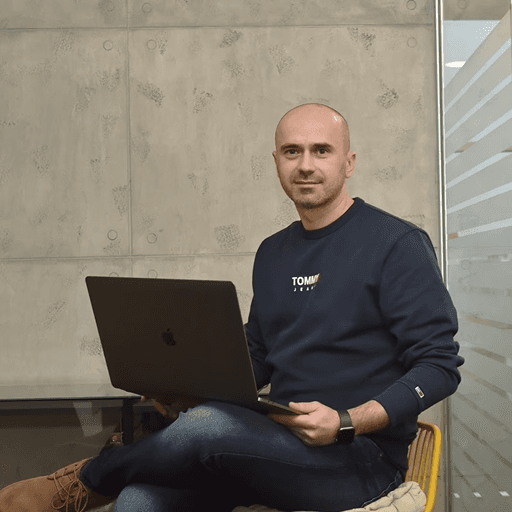
“Developers want convenience. They expect someone to translate their Docker Compose to the cloud. They're not going to rush to learn Kubernetes.”

“Bunnyshell was the only tool that handled our Helm + EKS setup without asking us to change everything.”

“60+ microservices. Bunnyshell deploys them in parallel and lets us control which ones come first.”
Frequently asked
questions
Can’t find what you’re looking for? Talk to our team
You absolutely can — and many teams do. The question is cost. Building preview environments with PR-based lifecycle, auto-cleanup, developer UI, cost tracking, DORA metrics, data seeding, and drift management typically takes 3-6 months and 1-3 dedicated engineers. Then it needs ongoing maintenance. Bunnyshell gives you all of that for $0.007/min with zero platform engineering headcount.
Explore More Preview & Ephemeral Environments Comparisons
Preview environment platforms and ephemeral infrastructure. Bunnyshell is purpose-built for full-stack preview environments.
Stop building environment infrastructure. Start shipping product.
Every PR gets its own environment. Every developer ships faster. 14-day trial, no credit card.