./alternatives
Top 9 Humanitec Alternatives
in 2026.
Humanitec pioneered the platform orchestrator category — but enterprise-only pricing, steep setup effort, and no free tier push teams to explore alternatives. Here are the best options for building your internal developer platform, compared honestly.
Why teams look for Humanitec alternatives
Enterprise-only pricing
Humanitec has no public pricing, no free tier, and no self-service signup. You must contact sales, go through evaluation, and negotiate a contract. This gates out startups, mid-market teams, and teams wanting to try before buying.
Months to first value
Humanitec requires defining Score workload specifications, building resource drivers for each infrastructure component, configuring golden paths, and mapping dependencies. Time to first deployment is measured in weeks to months, not days.
Orchestrator, not deployer
Humanitec is a platform orchestrator — it generates deployment configurations but relies on other tools (ArgoCD, Terraform, CI/CD) to actually deploy. You need the full tool chain underneath, not just Humanitec.
No AI capabilities
Humanitec has no AI sandboxes, no MCP server, no AI IDE workspaces. As AI-powered development becomes standard, teams need platforms that support AI agents, code execution, and autonomous workflows natively.
All 9 Alternatives at a Glance
Compared on what matters: platform approach, developer self-service, preview environments, AI features, and pricing.
Bunnyshell is the best alternative if you want immediate environment lifecycle management with AI capabilities, transparent pricing, and minutes-to-first-environment. Backstage for a customizable open-source developer portal. Port for a SaaS developer portal with self-service actions. Qovery or Okteto for developer-focused K8s platforms with preview environments. Spacelift for IaC governance at scale.
| # | Platform | Best For | Stack | Preview Envs | AI | Pricing | |
|---|---|---|---|---|---|---|---|
| 1 | Bunnyshell | Teams that need immediate environment lifecycle without months of platform setup | Compose, Helm, K8s, Terraform | ✓ | ✓ | $0.007/min, pay-per-use, unlimited users | Compare → |
| 2 | Backstage (Spotify) | Teams wanting to build a custom developer portal with service catalogs | Any (via plugins and integrations) | ✗ | ✗ | Free & open source (CNCF incubating) | |
| 3 | Port | Teams wanting a developer portal with self-service actions and catalog | Any (via blueprints and integrations) | ✗ | ✓ | Free (up to 15 users), Growth custom, Enterprise custom | |
| 4 | Qovery | Teams on AWS wanting a managed PaaS experience with environment cloning | Docker, Helm, Terraform, AWS | ✓ | ✗ | Free (1 cluster), Team from $29/dev/mo, Enterprise custom | Compare → |
| 5 | Spacelift | Platform teams managing infrastructure-as-code at scale with policy controls | Terraform, OpenTofu, Pulumi, Kubernetes, Ansible, CloudFormation | ✗ | ✓ | Free (1 worker), Cloud from $40/mo per worker, Enterprise custom | Compare → |
| 6 | Kratix | Platform teams wanting to build Kubernetes-native self-service platforms | Kubernetes, any (via Promises) | ✗ | ✗ | Free & open source | |
| 7 | Okteto | Teams wanting fast inner-loop development on Kubernetes | Kubernetes, Helm, Docker Compose, Kustomize | ✓ | ✗ | Free (3 namespaces), Self-Hosted from $72/dev/mo | Compare → |
| 8 | ArgoCD + Crossplane | Teams building a Kubernetes-native platform with open-source tools | Kubernetes, any cloud (via Crossplane providers) | ✗ | ✗ | Free & open source (both) | Compare → |
| 9 | Northflank | Teams wanting a managed PaaS with environment management and scaling | Docker, Kubernetes, databases, object storage | ✓ | ✗ | Free tier, Pro from $0.005/min, Enterprise custom | Compare → |
Bunnyshell — Environments in Minutes, Not Months
Humanitec asks you to spend weeks building Score specs, resource drivers, and golden paths before your first deployment. Bunnyshell gives you full environment lifecycle management in minutes. Connect your cluster, define a bunnyshell.yaml, and deploy preview environments per PR, production with autoscaling, remote dev, and AI sandboxes — with transparent pay-per-minute pricing and a free trial.
Why teams choose Bunnyshell over Humanitec
- Minutes to first environment: Connect cluster, define bunnyshell.yaml, deploy. No Score specs, resource drivers, or golden paths to build first.
- Transparent pricing: $0.007/min, free trial, self-service signup. No enterprise-only gates or sales calls required.
- AI-native: AI Sandboxes (hopx), MCP Server, AI IDE Workspaces for AI-powered development.
- Multi-stack: Docker Compose + Helm + K8s + Terraform in one environment.
- Full environment lifecycle: Preview, staging, production, remote dev, auto-sleep, DORA metrics.
- Git ChatOps: /bns:deploy, /bns:stop from PR comments — developer self-service without a platform build.
All Humanitec Alternatives Reviewed
Honest pros and cons for each platform, based on real product research and community feedback.
Backstage (Spotify)
Open-source developer portal framework for building internal developer platforms with plugin ecosystem.
- Highly customizable developer portal framework
- Service catalog with ownership and documentation
- Large plugin ecosystem from the CNCF community
- Framework, not a product — requires significant development effort
- No deployment or environment management built-in
- Maintenance burden: React frontend + Node backend + plugins to maintain
Port
Internal developer portal with self-service actions, service catalog, and scorecards.
- Self-service actions for common developer workflows
- Service catalog with scorecards and maturity tracking
- Faster to deploy than Backstage — SaaS, not framework
- Portal layer — doesn't orchestrate deployments itself
- Custom pricing — not publicly transparent at scale
- Less customizable than Backstage framework
Qovery
Internal developer platform for deploying apps on your AWS account with environment cloning.
- Environment cloning with preview environments per PR
- Deploys to your own AWS account (BYOC)
- Developer-friendly interface with Git-driven deployments
- AWS-focused — limited multi-cloud support
- Per-developer pricing gets expensive at scale
- Less platform abstraction than Humanitec
Spacelift
IaC orchestration platform for Terraform, OpenTofu, Pulumi, Kubernetes, and Ansible.
- Best-in-class IaC orchestration with OPA policy engine
- Drift detection and automated remediation
- Multi-IaC: Terraform, Pulumi, Ansible, K8s, CloudFormation
- IaC-focused — no application environment lifecycle
- No preview environments or developer self-service portal
- Different layer than platform orchestration
Kratix
Open-source platform-as-a-product framework for building Kubernetes-native internal platforms.
- Kubernetes-native platform framework using "Promises"
- Composable — define platform capabilities as reusable units
- Open source with no vendor lock-in
- Framework, not a product — significant build effort required
- Small community compared to Backstage or Humanitec
- Requires deep Kubernetes expertise to implement
Okteto
Kubernetes development platform with instant dev environments and preview environments.
- Fast inner-loop development with file sync to K8s
- Preview environments per PR with auto-deploy
- Developer-focused UX with minimal K8s knowledge required
- Kubernetes-only — no Terraform or multi-cloud
- Per-developer pricing at $72/dev/mo gets expensive
- Less platform abstraction than Humanitec
ArgoCD + Crossplane
GitOps CD with Kubernetes-native infrastructure provisioning — a common DIY platform pattern.
- Full Kubernetes-native stack — GitOps + infrastructure as CRDs
- No vendor lock-in — both are CNCF projects
- Strong community backing for both projects
- Two complex tools to install, configure, and maintain
- Steep learning curve — ArgoCD + Crossplane XRDs/Compositions
- No developer portal, self-service UI, or environment lifecycle
Northflank
Full-stack cloud platform for deploying, managing, and scaling apps and databases.
- Full-stack platform — compute, databases, storage, networking
- Preview environments with branch-based deployments
- Pay-per-minute pricing similar to Bunnyshell
- Less platform abstraction than Humanitec for enterprises
- Smaller community and ecosystem
- Less flexibility for complex enterprise golden paths
Trusted by engineering teams
shipping fast


“Manual tests on Argo CD PRs now take me seconds. When you review dozens of PRs a day, that's a game-changer.”


“Automatically created BunnyShell environment based on PRs, speeding up the entire task implementation process.”


“The automation and scalability that Bunnyshell provides complements the DigitalOcean platform, empowering developers to build amazing products.”


“Websites don't die anymore, sales keep growing sustained by state-of-the-art tech scalability. Customers send thank you cards.”

“From a release once in 2-4 weeks to multiple times per week, and nobody's stressed about it.”

“I can count on an integrated platform for managing our infrastructure — capabilities we don't have in-house, at a fraction of the cost.”

“I can do with Bunnyshell and a DevOps person what my clients are doing with 4 DevOps people.”
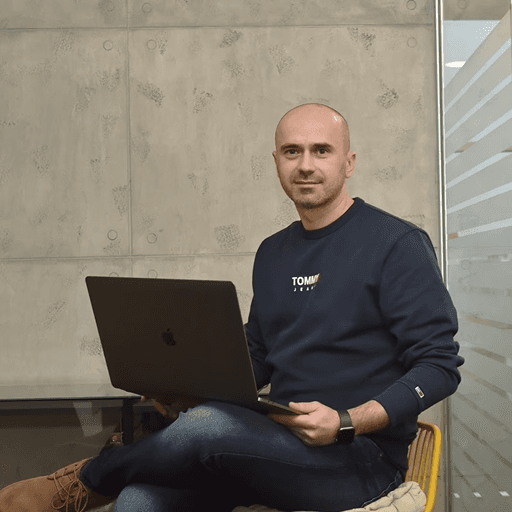
“Developers want convenience. They expect someone to translate their Docker Compose to the cloud. They're not going to rush to learn Kubernetes.”

“Bunnyshell was the only tool that handled our Helm + EKS setup without asking us to change everything.”

“60+ microservices. Bunnyshell deploys them in parallel and lets us control which ones come first.”
Frequently asked
questions
Can’t find what you’re looking for? Talk to our team
It depends on your needs. Bunnyshell is the best alternative if you want immediate environment lifecycle management with AI capabilities and transparent pricing. Backstage for a customizable open-source developer portal. Port for a SaaS developer portal with self-service actions. Qovery or Okteto for developer-focused K8s platforms. Spacelift for IaC governance.
Explore More Platform Engineering Comparisons
Internal developer platforms and platform engineering tools. Bunnyshell provides environment self-service without building a custom IDP.
Head-to-Head
Environments in minutes, not months. Start with Bunnyshell.
Every PR gets its own environment. Every developer ships faster. 14-day trial, no credit card.